The Gluten Debate

Author: Kate Zink at Chronically Holistic

Sadly we’re no longer eating the wheat that our parents ate. To be able to keep up with the amount of grain we eat in our diet it has been genetically modified to become drought-resistant, bug-resistant and faster growing wheat. It’s estimated that 5 percent of the proteins found in these modified types of wheat are new proteins that were not found in either of the original wheat plants. This is hard for our bodies to recognize and digest and are part of the problem that has lead to increased systemic inflammation, widespread gluten intolerance and higher rates of celiac.

Being gluten free has been a popular topic over the years. Some people immediately feel better, while others (like myself) did not notice any change at first but do long term. There are healthier gluten options just as there are dairy but just be mindful to eat it in moderation. Gluten damages the tight junctions in your gut because it is difficult to digest. When this happens small particles of undigested food, bacteria, and even toxins can escape to your digestive lining into your bloodstream. This then triggers inflammation and can lead to a leaky gut which creates chronic inflammation, food sensitivities and allergies.

Most gluten containing foods are low in nutrients and filled with additives that your body cannot process. Although this is all true, you also want to be careful while choosing gluten free options. Unfortunately, these products are usually filled with crappy oils, artificial flavorings and preservatives to make up for the taste that further contribute to inflammation. As well as the obvious foods such as breads, gluten is hidden in lunch meats, flavored dairy products such as ice cream, processed cheeses, spices labeled “natural flavors” and pre packaged cut foods. Scroll down for hidden sources of gluten.

What is gluten and what does it do to our bodies?

Gluten is freaking delicious but serves us with no nutritional value besides empty carbohydrates. It is a main staple of our American diets, but unfortunately due to the fact most common flours have no nutritional value and that it has became so genetically modified, in my opinion it actually does more harm than good when consumed.

Gluten is defined by the celiac disease association as , “a general name for the proteins found in wheat (wheatberries, durum, emmer, semolina, spelt, farina, farro, graham, KAMUT® khorasan wheat and einkorn), rye, barley. Gluten helps foods maintain their shape, acting as a glue that holds food together. Gluten can be found in many types of foods, even ones that would not be expected”. Because of this sticky glue texture it can be hard for our body to digest.

Important note: You don’t have to be Celiac (have a gluten allergy) to have a reaction or sensitivity to gluten. This was where I was stubborn and continued to eat it because my celiac labs were negative. Food sensitivity testing can be helpful here but I recommend an elimination diet prior to this.

What gluten does in our body?

If you have chronic symptoms of food allergies (see the list below) I highly recommend you doing an elimination diet with gluten. Although you can breakdown gluten it is very hard to digest it completely in most peoples guts leaving an undigested molecule that can lead to poor permeability in your gut lining which can result to further inflammation. By ignoring this inflammation more and more undigested foods can leak through which triggers an immune response which will just make you more sensitive to more and more foods. Not to scare you but this is what happened to me and I became sensitive too many common food allergy foods. Luckily it is not an allergy and you may be able to eat these foods again once your gut lining heals. It takes awhile for you to come to this conclusion and it does take time to heal, but is possible with proper guidance!

Symptoms of Food Allergy, Sensitivity, & Intolerance

The symptoms of food allergies, sensitivities, and intolerances can affect many parts of your body. I assumed if I was having food sensitivities it would present as digestive troubles, but to my surprise it can manifest as many symptoms as listed below. Symptoms can happen immediately after eating a food, or in some cases several days after consumption. Here is a small list of symptoms that can arise from a food sensitivity:

  • Digestive and IBS symptoms such as bloating, gas, stomach pain, diarrhea, or constipation
  • Fatigue, chronic exhaustion despite adequate rest.
  • Pain symptoms including joint pain, body pain, or headaches
  • Neurological symptoms such as brain fog, memory problems, anxiety, or depression
  • Skin symptoms such as rashes, hives, eczema, or acne
Gluten Sensitivity: Signs, Symptoms, and Complications

The most common type of gluten in our diet:

Enriched White Flour: This is what most processed goods are made out of. White flour essentially has no nutritional value. Any refined flour, including unbleached flour, is a refined grain. Refined grains are milled to take out the bran and germ of the wheat kernel. The milling process gives flour a nicer texture and an extended shelf life, but it also removes fiber, B vitamins and iron (the good stuff).

Enriched white flour is digested much faster than whole grain (not a good thing) because this usually results in a blood-sugar spike then crash. This releases cortisol (a stress hormone) every time this happens or every time you eat white flour. Whole grains are digested slowly due to the high fiber and protein, this results in you feeling full for a longer period of time and more stable blood-sugar levels. If you continue to eat gluten try to only eat things made with whole grains.

The term “enriched” white flour is deceiving. The nutrients that are added back in to “enrich” the flour are synthetic forms of what was stripped away during processing. These nutrients are unrecognizable and therefore, unusable by our bodies. Whole grain foods have more nutrients, period.

Flour is bleached so you cannot tell it is rancid bleached and enriched wheat are common ingredients on food labels. This means it is processed in such a way it is bleached and more than likely also having MSG (an addictive chemical that makes our food taste better). Flour is bleached with a chemical called potassium bromate. During the 1980s bromates were linked to cancer in laboratory animals but is still used in the United States although he FDA has encouraged bakers to stop using it, no ban has yet been placed. The ingredient is outlawed in Canada, the United Kingdom, and Europe. An “unbromated wheat flour,” in the ingredient list indicates that they’ve chosen to eliminate it from their process… but who has actually seen that on a label? So if you are going to continue to eat gluten after this post look for organic unbleached and unbromated wheat flour. But I recommend you limiting it or giving it up completely. Why feed your cells something with no nutrition which results in your body having to work harder to digest it?

If you are just not ready to explore the life of gluten free living I encourage you to eat whole grain and flours in their whole form such as Einkorn. Gluten is more absorbable if sprouted or soaked so breads like Ezekiel or silver hills are great options!

Hidden sources of gluten to be aware of:

I don’t want you to go crazy reading labels but I will list some sneaky ingredients and foods that contain gluten. Although the ingredients may not be good for you the FDA legally has to requires all food labels to include warnings from the top 8 major food allergens which makes it easy to spot when something contains gluten. These allergens account for more than 90% of all food allergies in the U.S. and include: Milk, Eggs, Fish, Crustacean shellfish, Tree nuts, Peanuts, Wheat and Soy.

Natural flavors can be a sneaky place for gluten to hide but if it is labeled gluten free it only uses certifiably gluten free spices, chemicals and additives that hide in natural flavoring.

Remember the Acronym “Brows” for the main sources of gluten.
B- barley
R- rye
O- Oats (unless stated GF)
W- Wheat
S- Spelty

Here are the more hidden sources:

  • Anything with barley or malt
  • Breading
  • Brewers Yeast
  • Bulgur
  • Couscous
  • Durum
  • Starch
  • Soy sauce
  • Natural Flavors
  • Bouillon cubes
  • Brown rice syrup
  • Modified Corn Starch

Great gluten free grain options:

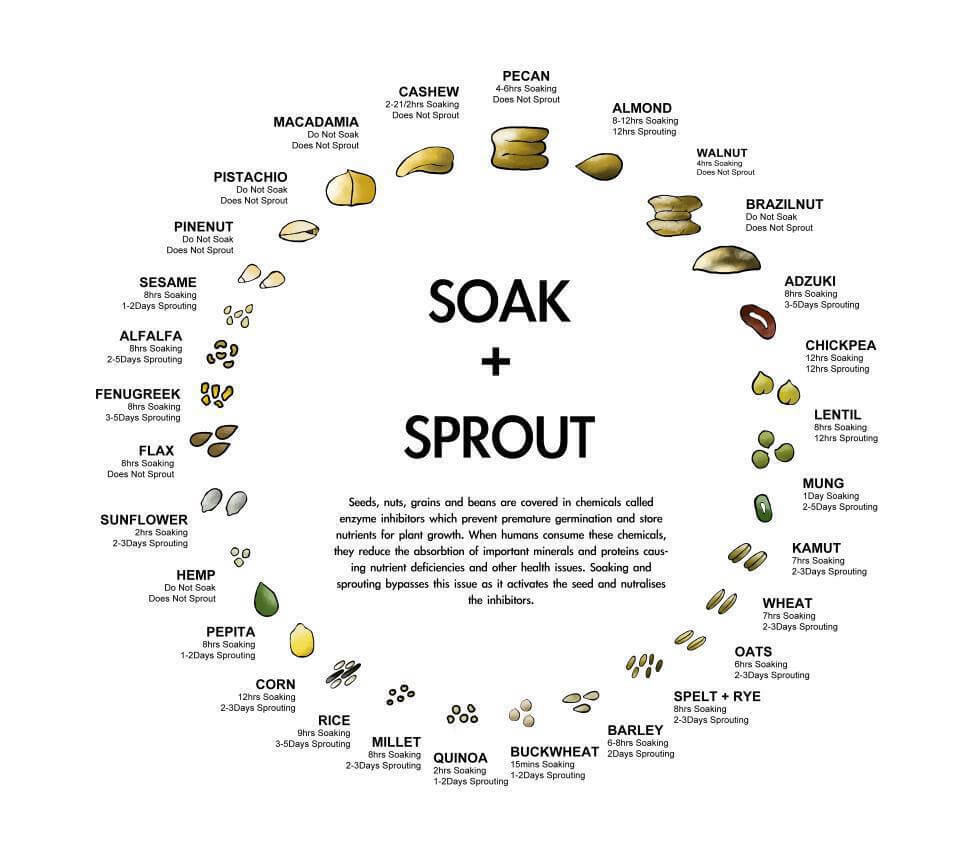
Below are some great gluten free options. Be sure to soak your grains as it removes approximately 20–50% of the phytic acid from the grain making it easier for you to digest. Experiment with sprouted grains as well as they are full of nutrition!

  • quinoa
  • wild rice
  • buckwheat
  • sorghum
  • tapioca
  • millet
  • amaranth
  • teff
  • arrowroot
  • oats (make sure they’re labelled as gluten-free as they may be contaminated with gluten during processing, also chose organic here as non organic oats are genetically modified and sprayed heavily with weed killer.)
Your Guide to Soaking & Sprouting Whole Grains, Beans, Nuts, & Seeds

Gluten Free Grocery Items

A lot of gluten free items have natural flavorings, artificial flavorings, MSG, inflammatory vegetable oils and sugars to make it taste better. If you are a non celiac avoiding gluten to help with inflammatory symptoms you want to be sure you are minimalizing these foods as well. Processed foods are filled with these ingredients but there are a ton of naturally occurring gluten free options such as meats, fruits and veggies.

Naturally Gluten-Free Foods List: 50 Foods You Can Eat Worry-Free – Pop Zero

My favorite gluten free “clean” processed food brands are:

  • Lesser Evil Snacks
  • Chomps and Epic Jerky
  • Siete Products
  • Unreal Chocolate
  • Justin’s Chocolate
  • Simple Mills Products
  • Larabars
  • Primal food Kitchen Products
  • Silver Hills Gluten free bread

Ingredients to stay away from in foods that cause inflammation and poor gut health:

Just knowing a product is gluten-free isn’t enough sadly—we need to look at the labels and see what ingredients the product contains. This is for non gluten free followers as well. Most of these ingredients are in highly processed foods so by avoiding them you can avoid most of these ingredients.

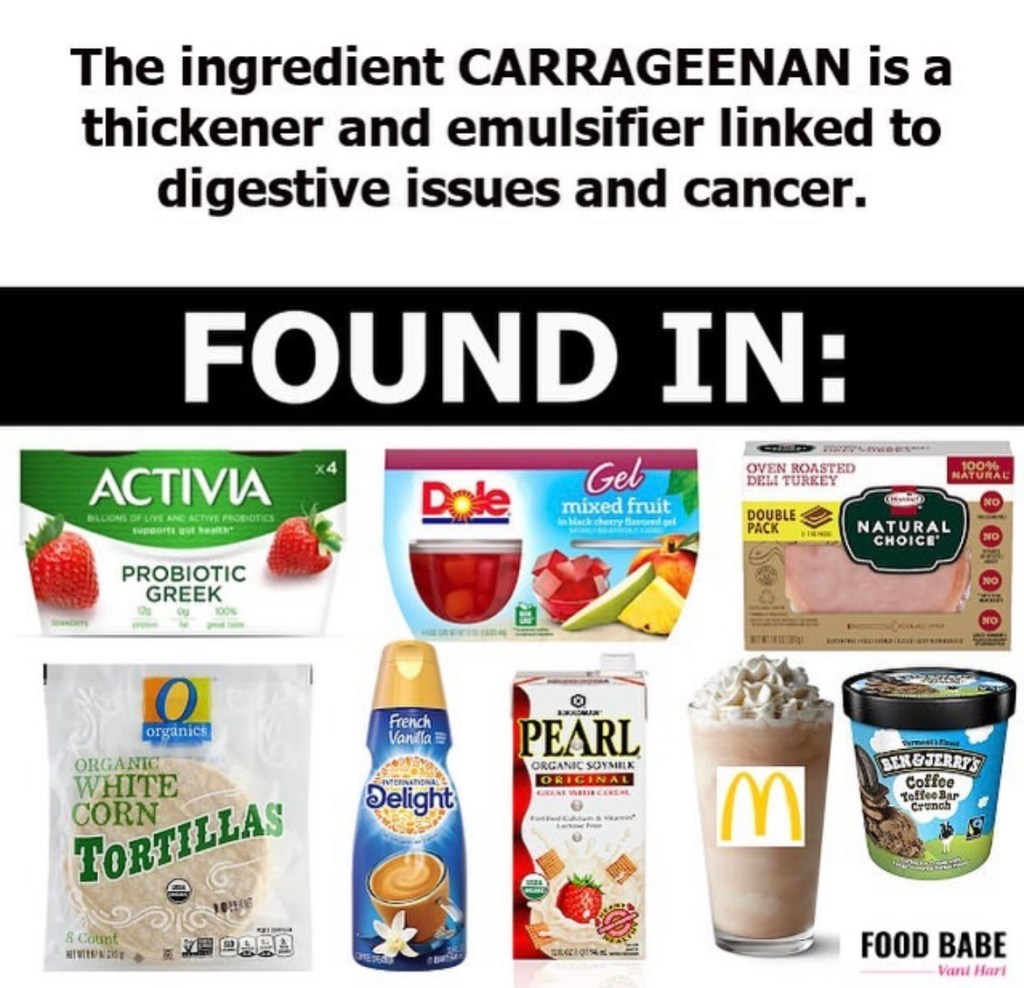
Even though the FDA hasn’t banned these ingredients, we have to remember that they are not food. These gums, stabilizers, and additives are just that! They are in most big named processed foods but you must remember they do not naturally occur in food. They are created to sell you on their product by making it taste or feel better by manipulating food texture. Most prepackaged gluten free foods are highly processed and lack the nutrients, vitamins, minerals and fiber your body needs. Besides gaining weight and putting yourself at risk for several diseases, you may become nutrient deficient. When you continually eat these processed ingredients you can become deficient in several vitamins, minerals and fiber. Overall, we want to eat food that is as close to its natural state as possible. Here are ingredients I tell my clients—both gluten-free or otherwise to avoid:

  • Grains that contain low or no nutrition (like corn, rice, tapioca starch, potato starch and non organic oats) that have replaced the gluten with starchy ingredients. The sugar contents in these ingredients are higher than wheat, sugar, and even candy bars. The ingredients in Gluten-free foods raise blood sugar higher than all other foods. Remember sprouting and soaking your grains make them more digestible in general.
  • Processed Sugar (especially high-fructose corn syrup, brown rice syrup and white table sugar)Gluten-free foods use sugar to replace the flavors lost when grains were removed, and it’s almost impossible to find a gluten-free product without added refined sugar. You’ll often see sugar listed several times on the ingredient list in its many different forms: corn syrup, maltodextrin, dextrin, sugar, etc. Many gluten free foods contain rice products (rice starch, rice flour & brown rice syrup) — Rice is notoriously contaminated with arsenic, which is a “potent human carcinogen” according to scientists at Consumer Reports and classified as a group 1 carcinogen by the International Agency for Research on Cancer.
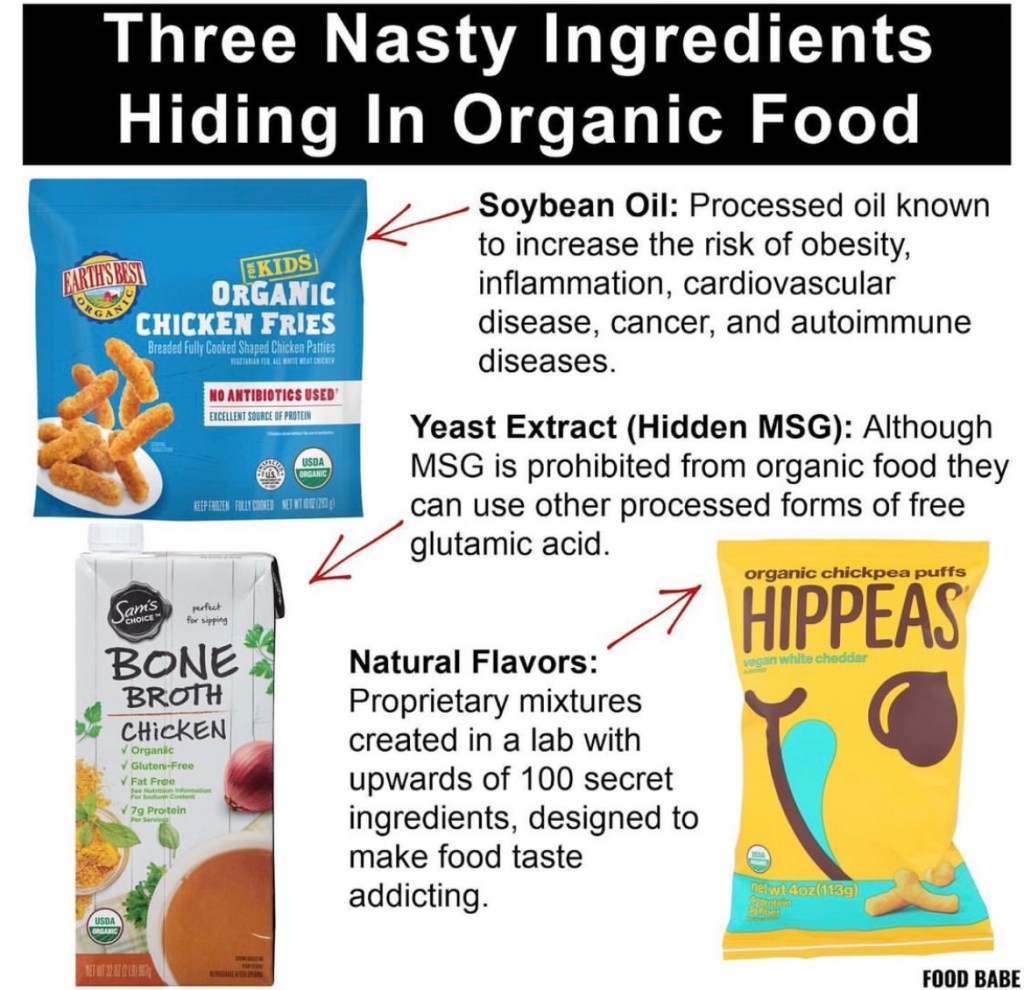
  • Inflammatory oils (Vegetable Oils) -Besides containing GMOs, canola, soy, and cottonseed oils are highly processed before they end up in our food. The most commonly used is soybean oil which is almost always genetically modified, which is high in omega-6 fatty acids that increase the risk of inflammation, cardiovascular disease, cancer, and autoimmune diseases.
  • Corn and/or soy which are usually genetically modified (GMO) — corn and soy ingredients (corn meal, corn starch, corn syrup, soybean oil, soy lecithin) are found in a lot of gluten-free pastas, crackers, and cookies and chicken nuggets. When you see anything made from conventional corn or soy on a label, it’s a pretty safe bet that it’s genetically modified (GMO) because the vast majority of these crops in the U.S. are GMO unless it is otherwise listed.
  • Gums such as Guar and Xanthan Gum which can trigger allergies or GI issues in certain people — Food companies often add the additive xanthan gum for texture and softness ESPECIALLY when gluten is taken out. This hasn’t really been shown to be a dangerous ingredient to eat, but be aware that it’s often derived from GMO corn and triggers allergies or gastrointestinal issues in some sensitive people.

** Remember I am not giving you medical advice and this is just my personal experience and professional knowledge. I hope this guide was informative and not meant to scare you but to make you aware of what we are feeding our bodies with daily and the benefits of removing gluten from your diet if you are having symptoms of chronic inflammation.

The Dairy Debate

So you are here because you have some issues with dairy. Might it be because you have an idea dairy affects you badly, have hormone issues, need to go dairy-free for you or your little one’s tummy, have chronic inflammation, or just want to see how you feel going dairy-free? Regardless of your reason, I hope this product guide helps make your journey easier!

First I want to start out saying, Dairy can have tremendous health benefits… but it is important where you source your dairy . Conventional Dairy (which is in 99% of processed foods, supplements and products) is not equal to grass fed dairy. Conventional milk and beef comes from cows that are fed mainly grain, soy, alfalfa, and corn products, The diet results in a high omega-6-to-omega-3 ratio which causes inflammation in the body. You are what you eat, so if you are eating or drinking a product from a highly inflamed cow fed an unnatural diet, you will also have inflammation, unbalanced hormones and poor fat in your body.

Grass fed dairy and meats are from cows who have a diet based on grass all year round. These cows graze on pasture until the winter when they are then fed cut grasses inside the barn. Yielding milk and beef higher in healthy fats, vitamins and minerals.

You can buy organic and/or grass-fed/pasture raised milk and dairy ( I know this is overwhelming but it gets easier). Grass fed is better than conventional but grass fed and organic is the best if financially feasible. Organic overall means the grass they are eating is free of chemicals and pasture raised means they are able to roam free vs. being fed grass. Here is article explaining it all.

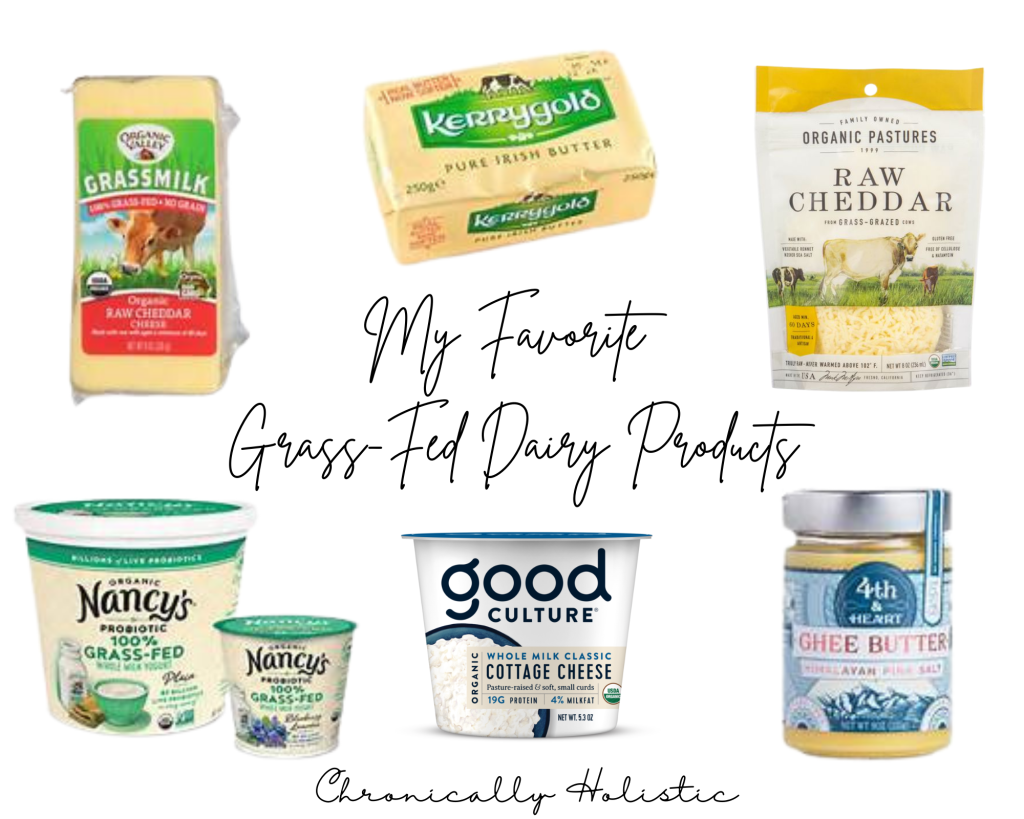
Here are my favorite Grass-Fed dairy products:
Dairy Free

I went dairy-free almost two years ago in midst of my healing journey. Ironically my headaches stopped (I am still not too sure if it was coincidence or not), but I got pregnant two months later. Dairy can be a great part of your diet if your body can tolerate it and it is cleanly sourced. Unfortunately, like most of our food these days, it is over-processed and the cows are fed an unnatural grain and high inflammatory diet like corn and GMO feed. Just like humans with breastfeeding, the food animals eat is transferred into their milk. This is why if you are able to tolerate dairy, it is important to drink it from a clean source and organic, if feasible.

The great news is, after you decrease inflammation in your body and heal your gut lining most people can tolerate raw or grass-fed milk in their diets again. Most intolerances and sensitivities are due to the process of processing the milk. Learn more about it here.

I have spent plenty of money over the years just to toss out yucky dairy-free alternatives. On top of the taste, many alternative options are filled with chemicals, inflammatory oils, and preservatives. The below options are not only my favorite for taste but are also on the cleaner side. I am gluten-free, so all of these products will work for my gluten-free people also! Most of these products are available at your local health food store such as Wegmans, Sprouts, or MOM’s Organic Market.

Dairy Free Suggestions – That actually taste good and aren’t terrible for you!
Here is a list of my favorite Dairy-Free Alternatives:

Three Trees Nut Milks : Organic with only the needed ingredients. Remember Oats should ALWAYS be organic, and it is easy to make it at home if this is out of your price range. Elmhurst is a shelf stable brand with good nut milks but non organic.

Culina Yogurt: This is the closest thing to greek yogurt I found and it has just the right ingredients with ]out added junk! Coco June is another alternative. I buy it plain and add in my own honey or sweetners.

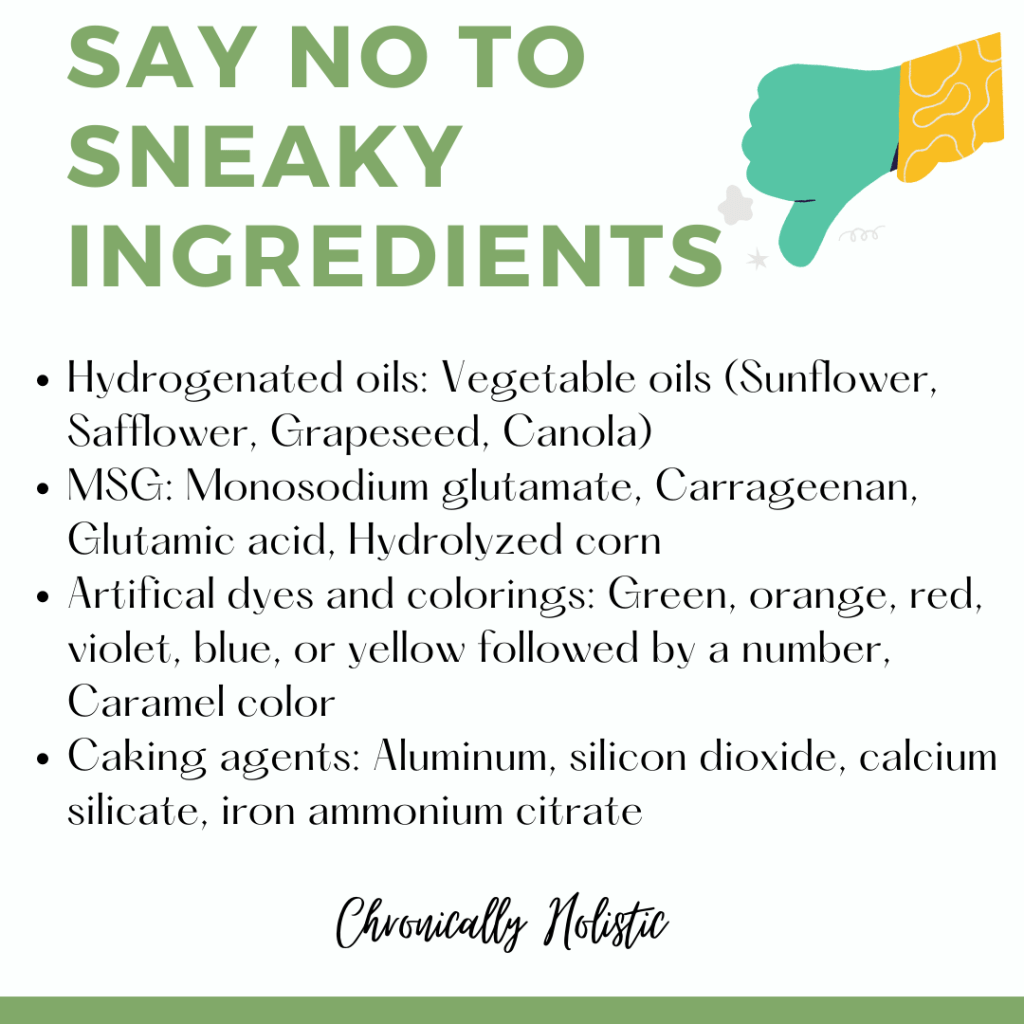
Siete Snacks: They make “Doritos”, Tortillas and Churro snacks. Everything they make is clean and delicious with avocado oil instead of hydrogenated oils like sunflower and canola.

Primal Kitchen: They make great dressings and sauces with clean oils and ingredients. Ranch is hard to copy– I make my own with their mayo and herbs!

Protein Bars: My new obsession is Skout but they have to be bought online. I love the ingredients. RX Bars and Larabars are okay but high in natural sugars. I also buy Cerebelly for my child.

Icecream: Be careful here…a lot of “dairy-free” ice creams are filled with junk. My favorite brand is Coconut bliss. Cado is another great alternative but still has gums in it.

Lesser Evil: They make great snacks! I love their paleo puffs and popcorns. They use ghee (if tolerated) or coconut oil for a true dairy free snack. They also make brownies that I mix into my ice-cream!

Simple Mills: This is a much have in a gluten free kitchen and luckily they make great dairy free options as well. They make mixes for cakes, muffins, and crackers.

Chocolate: No fear there are great dairy free clean options (everything in moderation). Unreal chocolate has healthier alternatives for M&M’s, Reeses, Almond Joys and Snickers! Back to Human (HU) makes great chocolate bars and baking chocolate. I also use Enjoy life chocolate for baking.

Goat and Sheep Cheese: A great alternative as your gut heals. Look for the raw versions. I buy it in a block and shred it for easy use. *Not everyone can tolerate goat or sheep cheese but a lot of dairy-free people can. Many alternative cheeses are filled with all kinds of junk. I just try to not eat it daily. It tastes great on pizza and grilled cheese. I don’t even miss regular cheese anymore, and I was a cheese lover. This goes for ghee as well if you are trying to add in butter. Butter alternatives–well stink.


These are my main staples in my household. I hope this helps you on your dairy-free journey. Going dairy-free can be hard at first, and it may take a couple weeks for your taste buds to adjust. BUT, I promise once you start feeling better and your taste buds adjust, you won’t miss the dairy as much as you think. Once your inflammation has decreased and your gut has healed you can add in grass fed and raw options. Feel free to reach out for more suggestions or guidance.
No time for your health?

I understand being busy with work, while raising children and keeping up with the house makes you not wanting to cook. Leaving you cooking somethings fast and easy and probably unhealthy. These meals usually involve a cardboard box and tons of preservatives and chemicals. Yes it was easy but was it healthy? Trust me, I hate cooking but I know how real food makes me feel. Is it worth the possible health consequences on us and our children? Obviously you are answering no to that one, but unless you’re informed it’s way to easy to do. There are plenty of healthier versions of your favorite meals and go to snacks, it just may take some practice and education.

I personally feel that we have so many more “sick” children and adults these days. I hear the statement “we are just more aware” all the time from people. No, we are moving further away from a real foods! Think of your childhood classroom and ask your parents the same questions: How many people had to get insulin in school? Inhalers? Had crazy rashes and ADHD? I can think of maybe 1-2 children. Now it is doubled if not more!

Think of your lunches and your children’s lunches. How many people have/had mini muffins, dunkaroos, a sunny-d and “fruit” gummy’s for lunch?? 👋🏻 I did, and we all thought it was healthy (minus the delicious dunkaroos) but hey there was fruit in it and a label that says no high fructose corn syrup , so I am good ✔️.

It’s so unfortunate how companies label things that make you feel that you are feeding your kids and self healthy alternatives when they are packed full of additives that are detrimental to your health. Even organic snacks have these sneaky ingredients. Honestly I was there and until I healed from food I would laugh at the seriousness of these ingredients.

This is not to fear monger you, but to educate you. We have all heard that shopping the perimeter of the grocery store is the best for our health. This is absolutely true because this is where most of our real whole foods are. Some choices are better than others, but whole food is ALWAYS best. Please feel free to check out my blog on organic foods to helo make those choices easier!

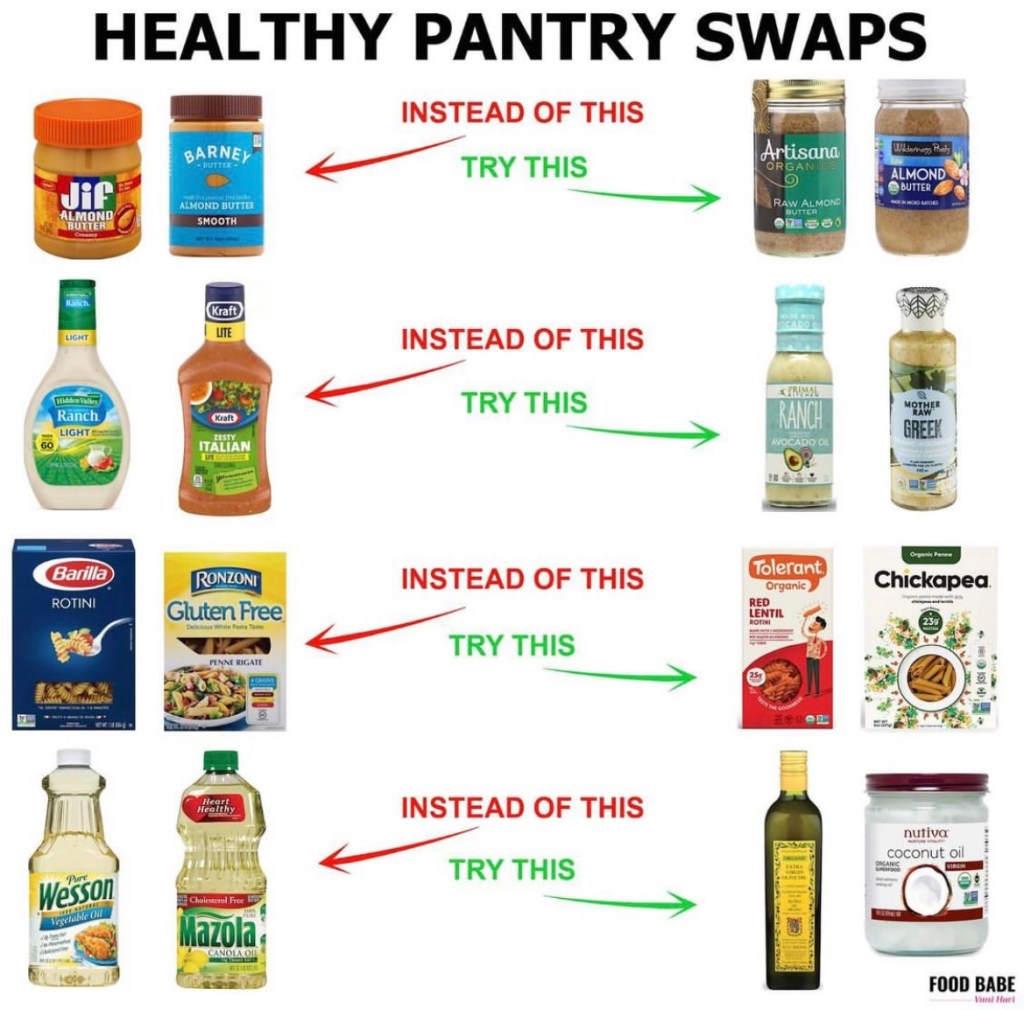
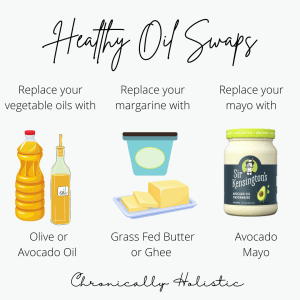
Here are some easy pantry swaps. Check out my blog on how to clean out your pantry for better tips on swaps and healthy pantry snacks.

So the summary of this rant is to help you and your family avoid the thousands of dollars on doctors and medications to try to correct your health issues. Even if you feel fine now your body can only handle so much! Instead start adding in whole foods to your diet! You don’t have to be perfect. I have a baby and don’t have time to make all my food and eat things in packages, but it’s limited and chosen wisely.

I am here to spread the wealth of my knowledge from my healing journey to educate and keep you healthy. I hope this was informative and reach out if you would like to learn more or work with me in the future 💛

Your stress bucket 🪣

You can eat a 100% organic farm raised diet and still be “unhealthy”. I was totally baffled for years why I was in so much pain but eating so “clean”. Just as you can’t dress like a football player and expect to jump into a professional game and nail it, you also can’t eat healthy and ignore other stressors on your body and expect to be healthy. Food is the basic support to our body and is essential, but there is so much more that contributes to our wellness.

If this is you, then kudos to you! If you’re here though you are probably suffering in some aspect and here for curiosity or guidance.

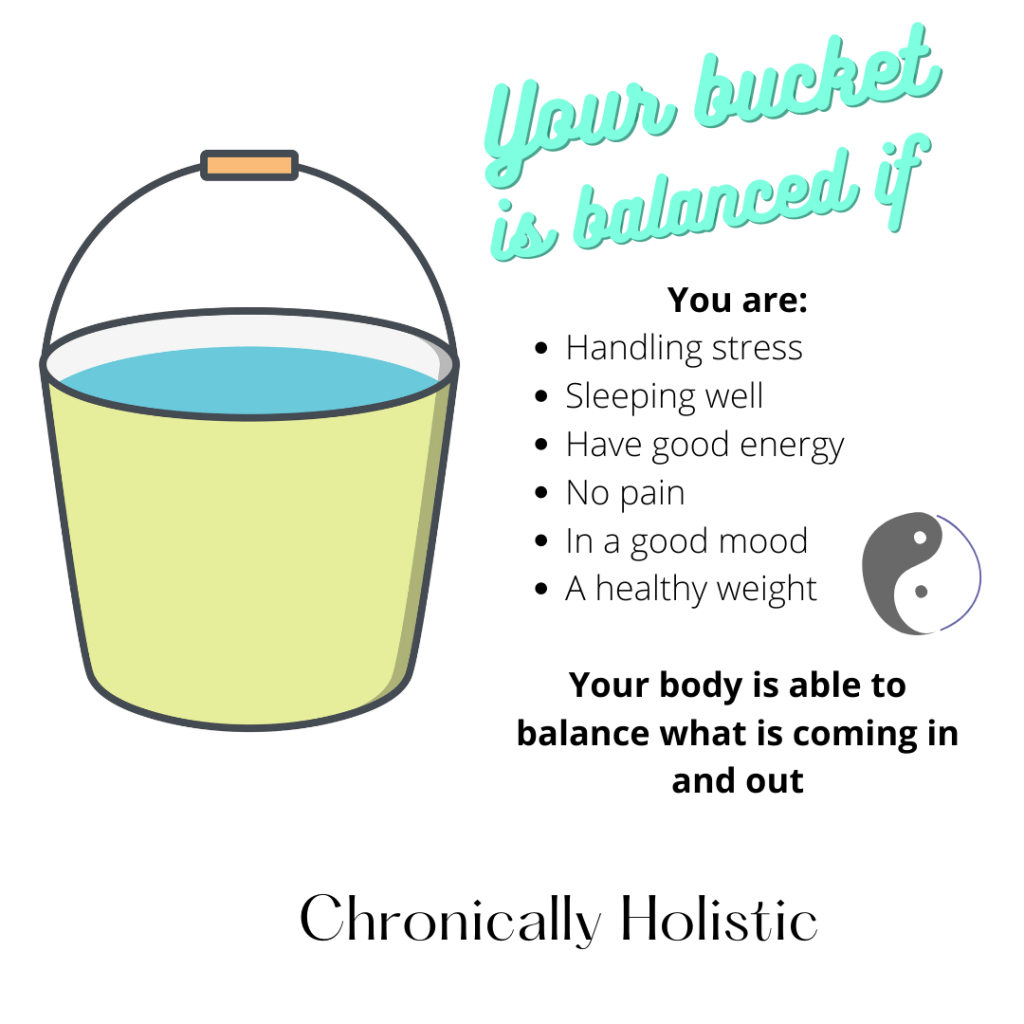
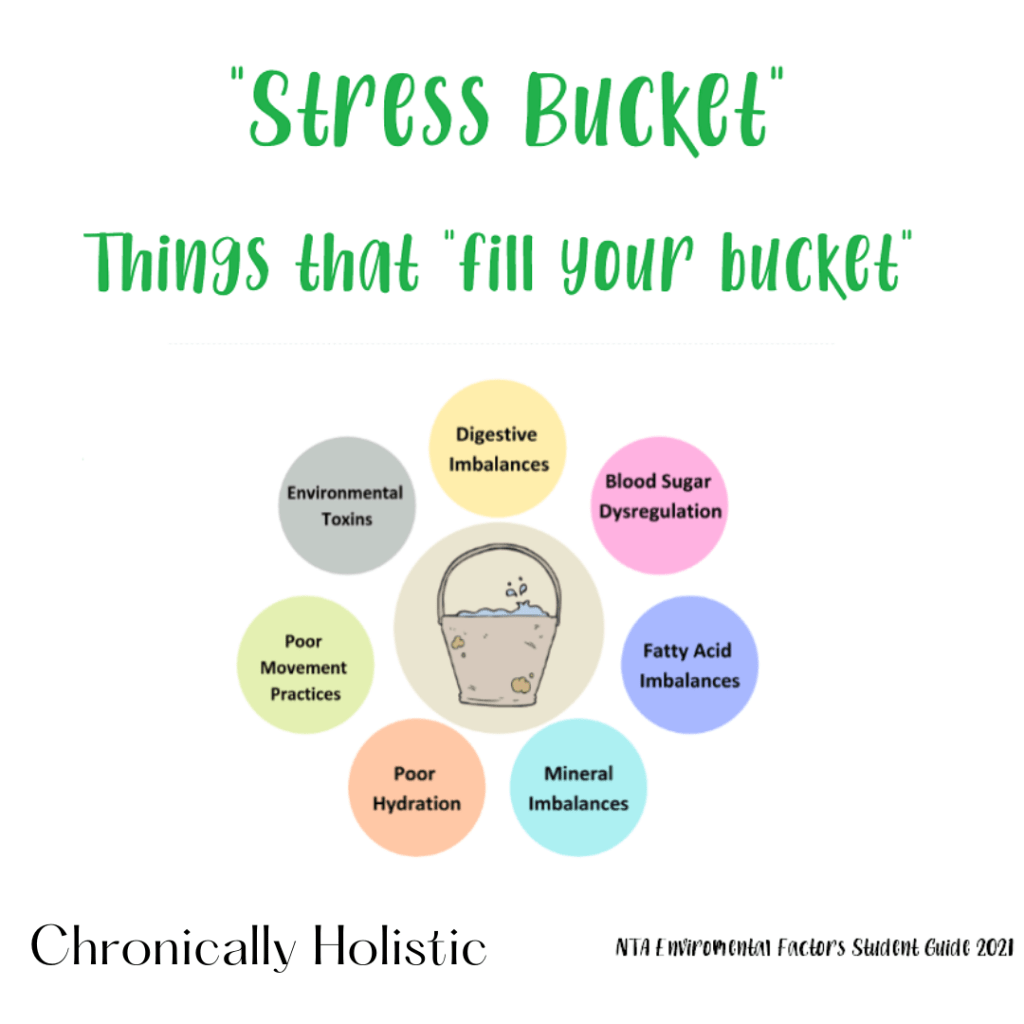
Your body is similar to a bucket. It can only take on so much before it “overflows” or in your bodies case, goes into overdrive which then results in our symptoms and illnesses.

There are many ways our body detoxs and rids our body of toxins and stresses. If your bucket is full then there is no room for more water to come in. I’m not saying you are supposed to live a stress free life, but one that your body can handle and stay balanced. Obvious stressors include visible stress, but many of us (myself included) had hidden stressors from your diet, environment and immune that are not obvious!

This is why it’s so important to look at healing your body as a whole and not at only the symptoms. On top of this every body is different. This is why some diets, detoxes and supplements work for some but not others. I have been there! It is frustrating, time consuming and expensive! Don’t give up if you’re suffering, there is light at the end of the tunnel. You just haven’t found your bio individualized plan to help you heal yet.

Here are some tips on how to balance out your “bucket flow”

  • DRINK MORE WATER! This is soo simple and widely known, yet most of our health issues are from cellular dehydration! Drinking GOOD drinking water and enough of it is always my #1 go to for health concerns, especially if they are new!
  • Correct digestive concerns: look into food reactions, sensitivities. Gut health is soo important to your health!
  • Eat a whole food diet: this will help balance out any blood sugar, fatty acid, mineral and detoxification issues. Everyone is individualized, so there is no one size fits all diet approach, but eating whole nutritious food is a great start! Check out other blogs on how to eat cleaner and how to clean out your pantry
  • Avoid environmental factors: Now you can’t live in a filtered bubble and avoid all toxins but there are some easy lifestyle changes to decrease your toxic load dramatically. Check out previous blogs on how to live a more chemical free life.

If this interests you and your looking for a way to get healthy for your individual health needs click the “how to work with me tab” to get on my list. I would love to guide you into becoming the best you. I will be accepting clients in August 2021!

Authenticity

Be yourself and be PROUD of who you are ❤️

I am sure people think I share too much about my life on social media. But I try to be authentic so others have the courage to do so. So we can share our love for similar likes and talents. ​So I can support other local businesses who created something from a small spark of hope and joy, because it’s something that is important to them and makes them happy. It’s important to do stuff for YOU, not for what you think others will like.

I feel like the word authentic has been trending and for once I am okay with a trend. I am happy that self love, self worth and being YOU is actually embraced. It shouldn’t be a trend but instead something we are taught young. Our parents used to tell us to be ourselves and we didn’t need all that make up, but we didn’t listen. These are the peoples judgements we should care the most about but unfortunately it’s usually the opposite. I use to care SO much what others thought. I would shape my look and friends to be who I thought would make me happy. Resulting in not having great friends because I wasn’t being true to them or myself. When I stopped caring what others thought and dressed how I liked, did what I enjoyed and allowed my family and friends to be heard, this is when I found true joy.

Being authentic should not be a trend, but taught to be the “new cool”. Social media has definitely made this hard. But remember people post the highlights mainly, and are posing for that picture. Candid pictures are few and far in between on my feed these days .

Be proud of that messy bun, sleep deprived look. No need to pretend to be anything more than you 🦋

The things people didn’t talk to me about motherhood

Forrest has been my biggest blessing, but I have struggled as a mom. Being a past nanny and a current nurse who cares for babies, I felt like I had a little bit of experience. Motherhood has shook me, and I don’t know if it’s not talked about enough or I wasn’t listening.

Everyone I knew from strangers to parents of patients at work always raved about what a great mom I would be, how calm I am and how great I am with their children, and then I became a mom. Crippled with anxiety about doing “what is right” and “why is he upset, what did I do?”. I know babies cry because they are just that, babies! But he has seemed like he is suffering and my nurse mom brain knows too much.

Within his 6 weeks of life he was diagnosed with a tongue and lip tie that was revised (although I didn’t want to originally), he has reflux and a hard time sleeping flat, and makes sooo many noises from a floppy noise-box (called laryngomalacia). These last two are fairly common as they are small little babes and will usually grow out of. Which I knew, but didn’t make hearing and seeing it easier. I also have an oversupply of milk and with all the above combined was choking him for basically 6 weeks. This can also be fairly common until your milk regulates but we were both miserable and from all the above he was suffering from gas and “colic” and that left me reddened with anxiety.

I used to give “advice” from my experiences and from what I knew was “right”. Then I became a mom and broke all the “rules” and my own advice.

While pregnant, I researched hours about bassinets, mattresses, natural child birth and so forth. I planned on breastfeeding but just assumed it would come somewhat natural. Well guess what- something so natural is hard! I was so surprised and the more I struggled and reached out to others, a lot of women do! I wish I knew this and feel like women should be more prepared! It would lower womens expectations and give women more of a chance to do what they were created to be able to do. Fed is best, formula or breast. My husband was formula fed and is healthier than I have ever been. I also suffer from a ton of food sensitivities and issues and assume I will need an expensive formula for my little one. This will be about my breastfeeding experience so far, so stop reading if you don’t want to hear about boobs 😂 The one thing I have learned during my short time as a mom already is that most moms are secretly struggling, don’t let social media steer you to think otherwise!

I googled everything. And I tried everything on google to help my little man to stop crying and from struggling. I called lactation a hundred times while crying every time I fed him which resulted in him choking and swallowing so much air. I tried pumping and doing bottles but that made my oversupply soo much worse and was making me even more depressed. Hats off to you exclusive pumping moms, I did it for a weekend and that was all I could handle! Even with lactation I didn’t feel like I had the right support and see why so many moms give up. Which I have absolutely nothing against formula and respect all fed moms as I do all births! This is more of a journal than an advice blog these days. Personally I really wanted to breastfeed and have let the anxiety and stress of it over take me. But why has no one told me about these troubles?

Luckily I kept reaching out, to social media, moms anyone that could listen honestly. I admit, I am sometimes too open but in this case it saved my breastfeeding journey. I know we will have more ups and downs (as this entire six weeks has shown me), but I finally feel like we are getting it and it will only get better from here. A mutual friend suggested a lactation consultant who was so empathetic and very involved allowed me to finally believed I could do this. I also took him to see an awesome chiropractor. I tried the natural route first (because thats who I am) and ended up on medication for a short time to hell regulate my supply. This was so stressful for me as everyone kept saying give it 8-12 weeks to regulate and I tried but the hours of crying and no sleep from the stress of me simply trying to feed my baby was beyond exhausting and depressing. I would say I gave it my all before resulting to medication and I wouldn’t have done it without medical supervision because I easily could have went a full 360 and lost my supply.

Your baby is with you for 9+ months. They feel your emotions. They feel your stress and anxiety. They feed of this, literally. I wish someone gave me a warning about how hard breastfeeding can be. I was not prepared and and hope this little post doesn’t scare you but helps prepare someone else. Don’t give up, at the end of the day if your baby is gaining weight you are doing something right. And if you have to switch to formula that is okay too. But it can get better. I still don’t have it all together breast-feeding still work. My nipples and husband and I would have disagreed a few weeks ago that there would be a light at the end of the tunnel – haha I know I am no where near the end of this roller coaster, our next battle to tackle is sleep!

Your killing it mamas or mamas to be 🤍

Forrest’s “Birth” Day

Forrest arrived into this world a week after his due date. Completely natural and unmedicated. This was my plan and the hardest thing I have ever done. It was also the most rewarding and amazing experience I have ever had. Although I was saying otherwise during my 12+ hours of laboring, I would do it again in a heartbeat. Birth is unpredictable and plans are preferences. I was lucky to welcome my sweet babe into the world as I intended, but I would have done whatever was needed to get him here safely.

Our happy family ☀️

Preparing for a natural labor and delivery

I read a ton of books, and joined a ton of mom pages. The pages were overwhelming because with natural birth sometimes comes anti everything medical. I am a medical professional and wanted a happy medium. There are ton of Hypnobirthing resources I read some but mainly focused on positive birth stories and birth stories throughout history. We forget women have been giving birth for years and not all countries (developed included) rely on epidurals etc. These are the top resources I recommend for anyone who is interested in going natural!

  • Ina May’s Guide to Childbirth: this has a lot of home birth stories but also hospital births. It make you feel confident and believe in your body, as women have been giving birth naturally for years.
  • The birth hour podcast: more birth stories. The more you read the more confident you will be in whatever happens during your birth. Also listening to people who went naturally after medicated births and why they preferred the natural delivery.
  • Your birth, your baby by Hollie de cruz: this included Hypnobirthing techniques which got me in the right mindset during the strong contractions and tough parts of labor. The book includes an mp3 of affirmations and music that I played while laboring at home.
  • Your bag packed with goodies (truthfully my Doula provided everything I needed but I had this all packed)
    • headphones for music/affirmations (never used as planned)
    • Essential oils for nausea (peppermint) my saving grace, clary sage, orange and lime are recommended also!
    • A diffuser (I ended up just using oil on a cotton ball in a bag from my doula, heaven sent during my nausea spouts!)
    • A speaker to play music (I never used this)
    • Yoga ball/mats if not provided (I used these very much)!
    • A birth partner! The doula and my husband were the only reason I was able to get through this day. It’s important to have someone you trust and that able to calm you.

The morning of his arrival

I had a feeling when I woke up in the middle of the night with contractions that “this was it”. I have been waking up for weeks with them but I had a feeling today was the day. I was an insomniac my entire pregnancy so went to the couch and started imagining the fact this may be my last night pregnant and uncomfortable on the couch, but trying not to get too excited. The contractions continued to happen every 15 minutes. I told my husband when he woke up my contractions were steady but to go into work since they were far apart. By 7am they were 5 minutes a part lasting about 45 seconds. My OB wanted us to go to the hospital when they were 4 minutes apart, lasting one minute for one hour. I was not able to sit and was walking through the contractions but was handling them well. I told my husband to plan on being home around 9am. Terrified I would bring him home for a false alarm (not that he would care), I did what my books all said to keep labor progressing and went on a long walk with my dog. I was definitely needing to stop every 4-5 minutes to breathe but was handling them well still. It was a beautiful 70 degree day outside and I just soaked in nature’s beauty knowing that I could do this, I am close to meeting my baby. I got home and had a random surge of energy. I fed my chickens treats, filled my bird feeders, made banana bread (which I happily packed and ate at the hospital), and took a long hot shower. My husband arrived home adorably excited and finished getting last minute things together in preparation around the house. Offering to help by doing counter pressure but I was tolerating it well by breathing and using my yoga ball (little did he know he would be doing hours of this later). By 10am my contraction timer was yelling at me for an hour to go to the hospital because they were 4 minutes apart lasting a minute for well over an hour. Being fearful I wasn’t dilated enough I thought about staying home but they were getting stronger and we made our way. The car ride was painful, but not terrible. I made my husband stop at Starbucks for my fav tea (that they were out of 😪) as I know I wouldn’t be able to eat or drink soon.

The hospital arrival

We arrived to the hospital and got all checked in. I was still in disbelief because I was handling this too well and walked in to L&D calm saying “Hi I am in labor”. I went back and got checked to see my progress and was only 5 cm. This was what I was last week and the midwife knowing I wanted to avoid medical interventions said to go home for a couple hours or go walk around for a couple hours. This was my biggest fear about leaving too soon and I was obviously upset. Right when I was walking out of the triage room with our bags we brought in excitingly, my doula showed up. She took our bags to her office and got us some goodies to set up “shop” outside in the courtyard for me to labor. My contractions were getting pretty painful. Little man was sunny side up and his occiput (back of his head) was giving me terrible back labor. The doula showed my husband some counter pressure techniques and we headed outside. She has a peanut ball, a yoga ball and mats. She knew once I was admitted I wouldn’t be able to eat and made me a smoothie and grabbed us snacks (which is hard to do since I don’t eat gluten or dairy!). I was getting pretty tired and knew I had a long day ahead so tried to sip and eat something for the energy, although I didn’t want to. I was uncomfortable but with the counter pressure and the multiple balls and positions I was making it through the contractions. Not caring I was in a public place or who was watching. They were 3-4 minutes a part at this point and I kept referring to my books in my head. Trying my hardest (it was hard) to breathe, relax my shoulders and visualizing my cervix opening so I could meet our baby. Every time I started to lose control I came back to “I’m going to meet my baby soon”.

Here was our set up (again all thanks to the doula!). We were so lucky for this great area and weather. It just shows you can labor anywhere! I didn’t care who walked by or heard the noises I was making, as my baby was coming today! I even went on a walk around the hospital. Needing to pause every three minutes for my husband to do counterpressure during my contractions with plenty of spectators.

Laboring in a hospital courtyard. If you know me, these are my favorite colors. Everything was meant to be!

Re entering the hospital

This time I was not calm at the desk saying I am in labor. I was moaning very vocally and having stronger snd longer contractions in my back every 2-3 minutes. After about three hours of being outside and waiting for triage I was checked. Thank the heavens I was 7cm and going to be admitted! I told my husband prior I was getting an epidural and screw the plan if I didn’t progress much, so we were so happy to hear this and I was able to continue to try to follow my plan. The IV was placed. Which PSA- if your going naturally don’t let them put in your dang wrist! From all the tensing and movement and bracing I was doing I am not sure how it stayed in as long as it did. This was about 430 and my doula joined us in the room for the rest of our journey. I labored in the room with intermittent monitoring every 20 minutes for the baby. I planned on walking around the room but I was exhausted and labored on the bed in different positions and on the ball. I had the help of my husband and doula pushing my hips open with each surge of a contraction as the babies head was really hurting me. I swear this baby was coming out of my butt and back wt this point. Between the counter pressure constant huffing of peppermint oil and breathing I was doing it but getting tired.

Almost pushing time

I met the OB since mine was out of town. I was 8cm which I was a little bummed about after the hours of pain. I was getting super tired almost laboring 12 hours at this point. My water was still intact and my bag was bulging. They ruptured it on purpose (after asking of course) in hope to speed everything up as everyone could tell I was in pain and tired. I think this was around 630 and the contractions really picked up after being ruptured. I was having less breaks between surges and was losing my control at this point and wanted to push. My doula helped me control my breathing and urge to push as I wasn’t dilated enough. At 730 the doctor came in checked me and said if I can push over my cervical lip I can start pushing- we were almost there! This was hard and honestly I was getting discouraged because it took me a little to do so, but I did it! The doctor allowed me to push with the nurse, doula and husband and would pop in between checking on me and another laboring mom who was also close.

Evacuation of the baby!

The doula looked at the nurse and said she is getting close. Within minutes I needed to push like the most natural instinct I have ever ever had. The nurse had called for the doctor who was currently delivering the other mom’s baby. An agency doctor luckily swooped in because there was no not pushing going to happen. I waited the extra few minutes for the doctor to come and I began to push differently. I did do controlled pushing although some books advise against this. I think being controlled helped me not tear as my body was preparing for the size of his head to come out. Using my body to open up my hips and allow a slow but steady opening for the baby. As hard as this was, because I was able to feel everything I was still in control of my pushes. The baby was stable the entire time and the nurses and doctors kept saying “Wow your baby is a model baby so happy in there” from the monitor readings. Which I continued to say, they can be happy out here too!!! At this point we didn’t know if we were having a boy or girl so the baby was referred to him as “they” often. After pushing with the doctor for not terribly long baby was here! I was planning on letting my husband announce the sex but from how I was positioned I saw right away and we simultaneously screamed it’s a boy!! Then I made everyone laugh by saying, “oh my gosh he looks like us”. Not sure why I thought he wouldn’t but that’s when it hit me, we made this.

Moments after birth

Forrest was always positioned very low and although I labored naturally he didn’t have that great descent down and came out rather juicy. After holding him for a minute they had to swoop him up for some stimulation and suctioning. Being a baby nurse I knew what was going on and that he was stable but all I wanted was him on my chest. The doula was taking pictures and running them over to me as they got him stable and settled. After the longest thirty minutes ever I got to hold my little grunting baby and in about an hour he was stable enough to feed. I finally got my magic hour and felt like a mama. Forrest William arrived at 8:21 pm on April 5th 2021 💙 7lbs 3oz and 20.5 inches long.

Recovery

I do not have another birth to compare it too but multiple health care professionals I met during my day had said they had done it both ways (naturally and medically) and naturally they healed better. You can feel the urge to push and the contractions fully, resulting in less medical interventions because baby is hopefully not in distress and putting you at a lower risk for tearing. My biggest complaint was I felt like jello after giving birth. The hours of laboring and bearing down to push was the biggest workout I had done in 9 months (honestly maybe ever). The agency doctor who jumped in like a superstar kept complementing me saying I was so controlled and impressed with me. Which I did not feel like I was in control in the moment looking back I was. I could trust my body. I had a slight tear and was getting around slow for the first week and was sore (ice and honeypot pads are the bomb). By two weeks I was going on walks and getting out of bed without pain. Luckily I didn’t have to deal with any of the side effects such as constipation, swelling or headaches from the medications. I just got to soak up being a family with my husband and baby boy. Thank you for reading. Hopefully it wasn’t to much information and you enjoyed my birth story.

Doula information

Due to covid I chose a doula through the hospital as you only can have one person with you in the delivery room (at the time I birthed) at GBMC. The doula program was worth the money and then some. Everything happens for a reason and I am blessed Lanny came into our lives. I am not sure we could have done it without her. If you are local I totally recommend delivering at GBMC and using their Doula Touch Program. Here is their link for more information!

Hopefully this helps you want to try to birth naturally. You were made to do this ✨.

Pantry Cleanout

Before starting your journey with me, or alone, try to have clean ingredients available for cooking as you can afford.

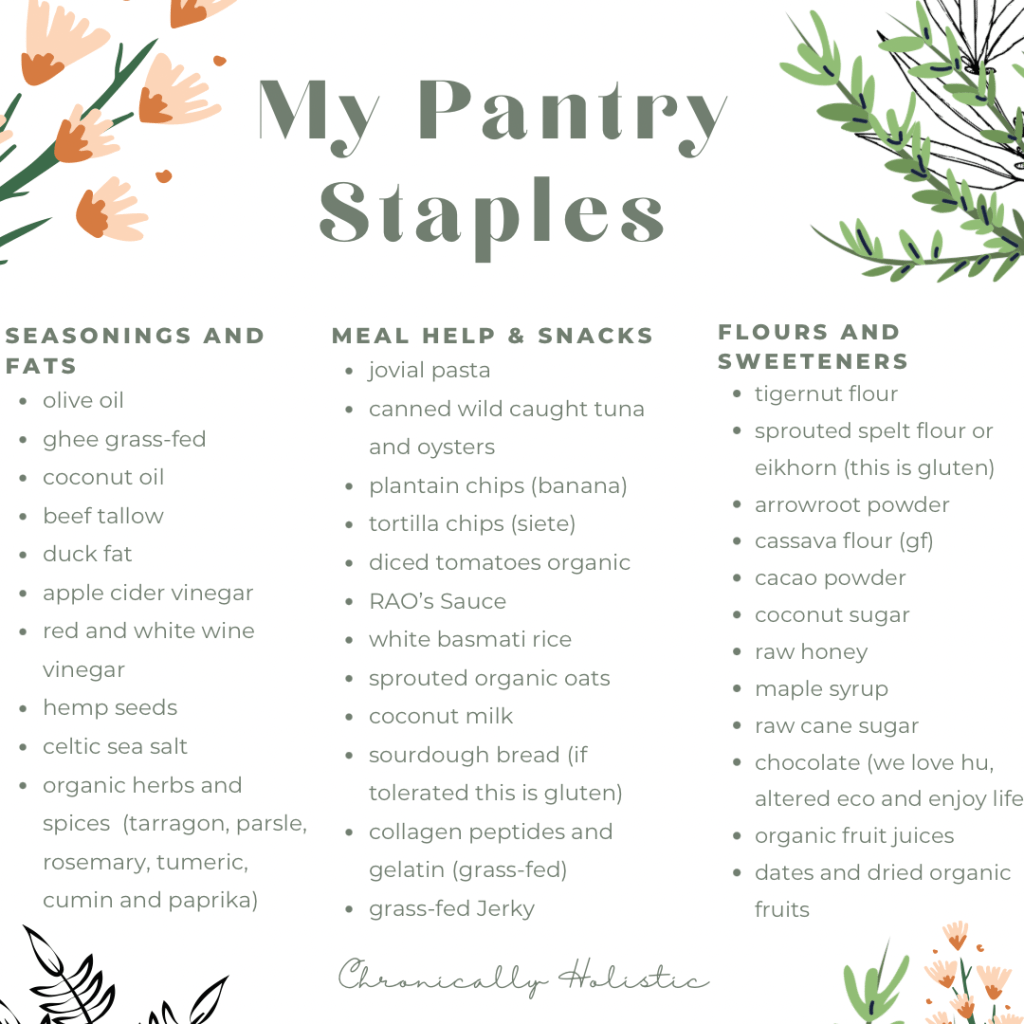
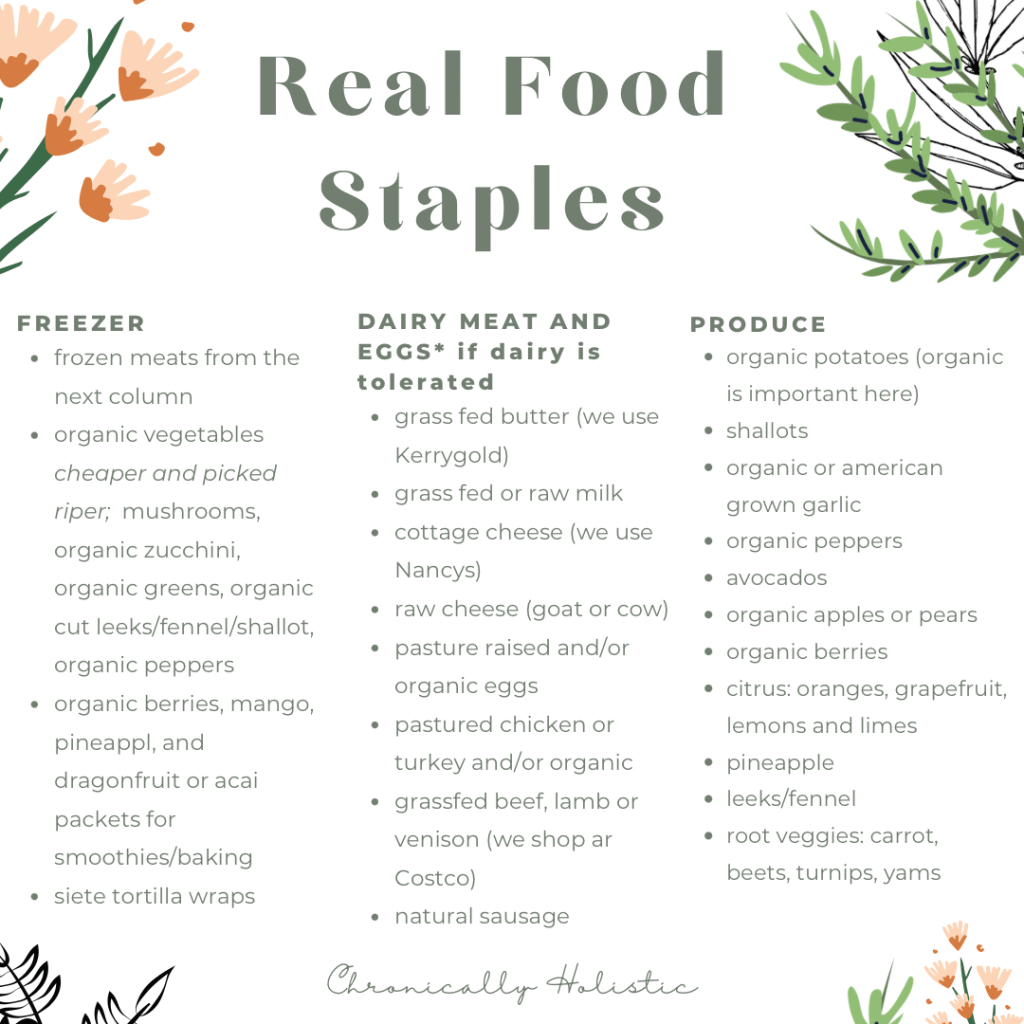
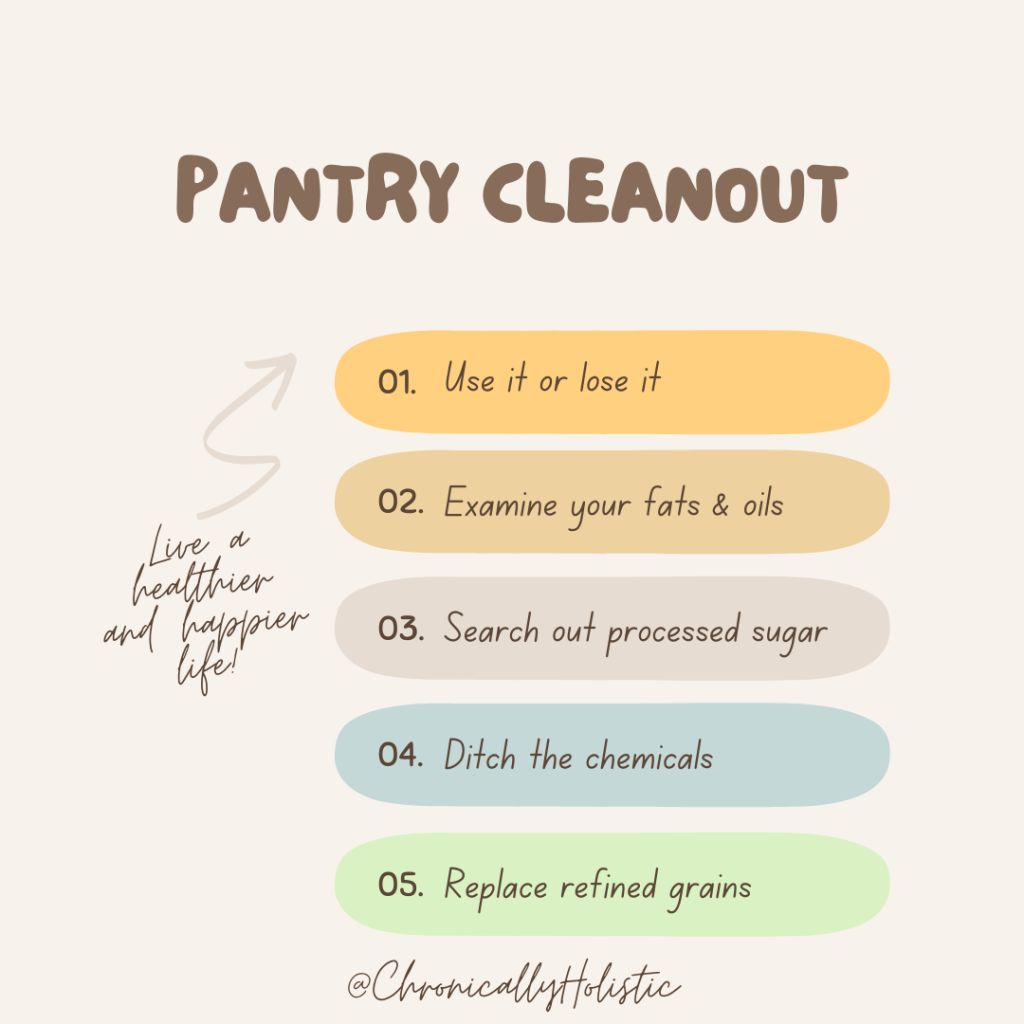
Below are images of my “staples” for my pantry, refrigerator and freezer. Be sure to read the five tips to understand what ingredients to avoid!

As inflation rises, we are utilize growing and gathering our own food. This may not be realistic to you. Farmers markets, CSA’s, and wholesale markets are great options if you have them available to you in your area.

Book a day to do this WITH whoever you live with so they understand the ingredients in their food also.

Take advantage of the time together or alone to focus on a healthier version of you!

Here are five “pantry clean out” tips to help ditch processed foods and move toward a more whole-food diet.

Don’t stress about being perfect, as always baby steps! Be sure to check out my posts on a cleaner healthier home and eating organically.

#1 Use It or Lose It!

We all have that pantry or fridge filled with salad dressings and condiments. Start by looking at the expiration dates and go from there. Use the rest of this list to decide whether toss it. If it has unhealthy oils (look at the #2) or unrecognizable ingredients (probably artificial ingredients, preservatives or chemicals) and isn’t a main staple in your house, trash it. If it is a staple, look for a healthier brand alternative! Check out my gluten or dairy post for swaps, or reach out!

#2 Examine Your Fats

Most people are “fat phobic” so they use fat-free options which are actually worse for our bodies. The alternatives are not natural and make more work for our body to process. A lot of these oils are rancid and only allow for more oxidative stress to occur which results in increased inflammation in our body. So do yourself a favor: toss those vegetable oils and use some good quality grass-fed butter!

Where to start:

  • Toss out fats that are unhealthy for you! These include any generic vegetable oils (canola, safflower, sunflower, soybean, corn, cottonseed, peanut).
  • Replace with tallow, lard, ghee, duck fat, coconut oil, avocado oil, grass fed butter, and olive oils. I personally love cooking with ghee!
  • Toss anything that says “hydrogenated” or “partially hydrogenated” as these are trans fat.

#3 “Search Out” Sugar

Most of us know sugar is not needed in our diets, but let’s face it: it’s delicious! There are better and healthier options to enjoy your baked goods and sweet fixes. You don’t have to be perfect; enjoy that cake or ice cream when warranted. Real sugar is ALWAYS better than an artificial or zero calorie alternatives which are unnatural and require our body to work harder to process as well as unwanted side effects such as digestive and hormonal symptoms.

Where to start:

  • Toss anything with high fructose corn syrup, artificial sugars, or bleached and altered sugars.
  • Here are the most common artificial and sugar alcohol sugars to avoid:
    • Aspartame (Equal, NutraSweet). It’s mostly used to sweeten diet soft drinks.
    • Saccharin (Sweet’N Low, Sugar Twin). It’s used in many diet foods and drinks.
    • Sugar Alcohols (Erythritol, Maltitol, Mannitol, Sorbitol, Xylitol)
    • Saccharin (brand names: Sweet ‘N Low® and Sugar Twin®
    • Sucralose (Splenda). It’s in many diet foods and drinks.
  • Chose unprocessed cane sugar such as raw turbinado, coconut sugar, maple syrup, and raw honey (my fav). Your body needs sugar to function, everything in moderation!

#4 Ditch the Chemicals

If you have followed my other posts, you are probably aware that this is a fav subject of mine. The chemicals found not only in our foods but also in household items are extremely disruptive to our bodies. Once you become educated on what is in the food we eat and what we use to clean our homes, it isn’t a surprise that chronic illness and poor health continues to climb. For the purpose of the pantry cleanout, we can simply say that fake ingredients can cause direct damage to our endocrine, digestive, cardiovascular, immune, and neurological systems while offering no nutritional benefit. As a result, they have no place in our homes or on our plates.

Where to start:

  • Look for ingredients such as food dyes, artificial sweeteners, preservatives, MSG (which has many names), artificial flavorings, and thickening agents.
  • If you don’t recognize the ingredient or it is an acronym, chances are that it’s processed and our body can’t recognize or use it either.
  • Fortified and enriched foods. Unfortunately, many fortified or enriched foods are heavily processed and packaged making it harder to process. These enrichment is added because they often come with high sodium, fat, and sugar content which depletes nutrients!
  • I know this is an expensive step, so start small! Swap out your pantry staples such as mayonnaise, salad dressings, and frequently eaten snacks for healthier ones and go from there. That is where most cheap oils and chemicals are hidden.

#5 Replace Refined Grains

A lot of people suffering chronically have issues with grains. Grains are not meant to be eaten with every meal and snack despite the food pyramid recommendation of whole grain servings a day. Gluten can be very inflammatory in our bodies and unfortunately grains are not the same as they were when our ancestors ate them. If you can tolerate grains, eat them in the whole form and soak them, if applicable. If you are just trying to live a healthier lifestyle and can tolerate grains, don’t beat yourself up for the pizza or cake. Live your life but know how to make smart choices!

  • Bleached or enriched flours are not whole grains. If you tolerate grains, try flours in their whole or sprouted form.
  • Use flour alternatives for those who cannot tolerate grains (such as coconut, cassava, tigernut–my fav flour).
  • Soak your grains (click for a detailed guide) It removes something called Phytic Acid which aids with digestion of grains and helps the absorption of nutrients. Print this out and put it on your fridge for future

👏🏻 All clean

This is not a race. Replace what you can afford when you can or need to replace it. This is a lifestyle change not a diet. It takes time to change, but you can do it. I can’t wait to hear about how you feel as a healthier version of you!

How to help your Immune System Function at it’s best this Winter

A fever any day at any age promotes instant fear, especially during the pandemic. It’s even scarier if you are a mom because kids get sick and get fevers. I have had a lot of health issues, but luckily I have not been “sick” for over three years. Prior to to this I was reliant on antibiotics and Tylenol every winter. By overusing medication when it wasn’t absolutely necessary I weakened my immune system by depleting something called glutathione. The only way I discovered this is was from a very accurate and personalized blood test that tested my blood at a cellular level ran by a naturopath. Which means I got to see how my cells were working not how a blood level looked. If you didn’t pay attention in science class we are entirely made out of cells! Every muscle in our body, to organ to our self (organism) is made of cells. So functioning on a cellular level is beyond important. For me this meant my blood levels looked okay, but on a cellular level the minerals, vitamins and antioxidants such as glutathione were not being absorbed/produced or used properly. A lot of things can cause this such as; Chronic Illness, Medication Overuse, Chronic Stress and a Poor Diet (everything always comes back to nutrition!). Sadly, most of American’s suffer from one if not all the above causes. I am hoping to help educate you on when you need to treat a fever and how to keep your immune system working in full gear for this upcoming winter season. As always remember this is my personal not medical advice, always seek professional help if you need medical attention.

Glutathione’s Role in Your Immune System.

Glutathione is one of the body’s most important and potent antioxidants.! Antioxidants are substances that reduce oxidative stress by combating free radicals in the body (Berkheiser, 2018).

By taking medications such as Tylenol when not needed you are suppressing and depleting this great antioxidant! Other causes listed above are chronic illness, stress and a poor diet. This is why it is important to treat your body well because although you may not think it is important, it is on a cellular level to survive and stay healthy!

Glutathione: Benefits, Side Effects, Dosage, and Interactions

The Critical Roles of Glutathione (Pizzorno, 2014) :

  • It helps protect against oxidative stress (breakdown of cells from exposure to chemicals and toxins)
  • Cofactor for several antioxidant enzymes
  • Regeneration of vitamins C and E
  • Neutralization of free radicals produced by Phase I liver metabolism of chemical toxins
  • Transportation of mercury out of cells and the brain
  • Vital to mitochondrial function and maintenance of mitochondrial DNA (mtDNA)

When do you need to treat a fever?

Fevers are not necessarily dangerous.  The infection may be! A fever is certainly scary but it isn’t always an emergency if you or your little one has a high fever. Fevers stimulate a strong immune response in our bodies which can quickly eliminate pathogens (infection). We want that immune system to kill the infection and not suppress it with medications. Many people panic when they see a fever of 100° F in fear that their child or self will develop brain damage and rely on an antipyretic such as Tylenol or Motrin. An actually temperature is not considered a fever until the it reaches greater than 100.4° F with a rectal thermometer. I read a great post by My Friend the Pediatrician on Facebook. It basically says to follow your gut and observe your child or yourself. You know your body or your child’s more than anyone else! Here are a few things to consider before treating with medication:

  1. Pay attention to your body or child’s body more than the temperature reading. If you or your child is acting in a way that you are concerned, that is more important than a temperature reading. This is when medication and a phone call to your doctor is needed. Lethargy, not crying for infants, and no wet diapers or tears for children can be signs the infection is worsening, there is trouble oxygenating or dehydration. These signs no matter of the temperature warrant not only a call to the doctor but a trip to the hospital.
  2. A fever between 100-100.4 is safe if you or your child are not showing signs of distress or dehydration listed above. You want to fight off those bugs and keep your immune system working non suppressed.
  3. Fussiness or crankiness is not a reason to treat with medication. If you don’t feel good you are not going to be in the best mood! Now if your are cranky because you broke your leg then I think some pain medication is warranted! Otherwise let your immune system work, rest, give or get cuddles and eat the best food you can get down. Always call your pediatrician or doctor if you are concerned.
  4. With all this being said.. it is NEVER normal for an infant under age 3 months with a fever (greater than 100.4° F). This warrants a call to your pediatrician and needs to be checked out immediately.

How to boost your Immune System?

  • Try to incorporate a variety of leafy vegetables, fresh fruit and good quality meats to get in Vitamin C, Sulfur, Selenium and naturally occurring Glutathione! These vitamins, minerals and antioxidants help promote a healthy immune system. Examples include:
    • Strawberries (Vitamin C)
    • Citrus fruits (Vitamin C)
    • Kiwis (Vitamin C)
    • Peppers (Vitamin C)
    • Broccoli (Sulfur)
    • Brussels sprouts (Sulfur)
    • Cauliflower (Sulfur)
    • Mustard greens (Sulfur)
    • Cottage cheese (Selenium)
    • Brown rice (Selenium)
    • Brazil nuts (Selenium)
    • Good quality meats (Selenium)
    • Spinach (Glutathione)
    • Avocados (Glutathione)
    • Asparagus (Glutathione)
  • Avoid alcohol, this has been proven to directly increase liver stress which makes it harder for your body to detoxify and function on a cellular level. This is especially important if you are sufferings from chronic illness, stress or nutritional deficiency.
  • If you are sick and none of those foods sound appetizing (I don’t blame you) make some homemade bone broth with some good quality bones (organic if available). I make this a couple times a month to cook with and have a stash if I need to sip on some soup or broth when I need a little immune boost! If you have an Insta-pot it is sooo easy to make and so yummy! Here is how I make mine:
    • Place all your bones (beef or chicken) in the instapot.
    • Add 6-8 cups of filtered water
    • Add 2-3 cups of vegetables, bonus if you add some from the list above. Fresh is better but frozen is better than none.
    • Add garlic, onion/shallots/leaks
    • Fresh or dried herbs, Salt and Pepper
    • Cook on HIGH for 1 hour
    • Let cool and strain and freeze for cooking or sipping! If you did it right it should be a gelatinous texture after cooled or refrigerated.

I hope you have a healthy winter and healthier immune system always!

References:

Berkheiser, K. (2018, April 25). 10 Natural Ways to Increase Your Glutathione Levels. Retrieved October 17, 2020, from https://www.healthline.com/nutrition/how-to-increase-glutathione

Pizzorno J. (2014). Glutathione!. Integrative medicine (Encinitas, Calif.)13(1), 8–12.

Intuitive Eating

Intuitive eating has changed my life. I eat good food when I am hungry and I enjoy a treat within reason. Intuitive eating is defined as, “eating is based on physical hunger rather than prescriptions from diet books and experts. Eating should satisfy physical hunger without causing guilt”.

Intuitive Eating vs. If It Fits Your Macros - FIERCE AND STRONG

I don’t count my calories. That is a scary statement for almost every female not satisfied with their body and weight. I also don’t count my steps, I do light intensity work outs when I have the energy, I don’t weigh myself, I eat good food when I am hungry and follow the 80/20 rule. I know when I talk about “dieting” people can get disgusted with me because of my size. Everyone’s body is made to be a certain size, the biggest goal anyone should have for themselves is to feel healthy and comfortable in their body. I have been at both ends of the spectrum from too thin to overweight. At neither end did I feel comfortable or healthy. I don’t read into nutrition labels for anything other than nutrition and mainly focus on the ingredients. I believe in intuitive eating, a balanced diet with health y food and indulging with out guilt…and I am in the best shape of my life! Yes a simple science of subtracted x amount of calories a day will equal in weight loss, but you also are going to stress yourself out by tracking and stress yourself out when you aren’t perfect… and your body doesn’t function well under stress. So in turn, your anxiety and obsession with your weight and diet will only leave you stressed unhappy and not working properly. Lacking energy, anxiety and chronic pain have been issues I have suffered with on top of body confidence issues…and I know I am not alone. That’s why I am promoting a healthy lifestyle so others can begin to heal and feel better!

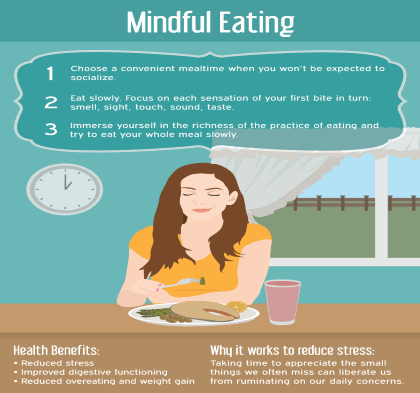
7 Steps To Mindful Eating! | The Tao of Dana

Stress and weight loss.

We all have stress in our daily lives. Especially in our current state with Covis-19. But even “pre-virus”, we were obsessed with our weight status. Most women have measured their bodies before and step on the scale obsessively. We obsess over how many steps we took and how many calories we ate and burned. We work long and odd hours and all have families or other obligations that make healthy eating the last thing on our radar. A lifestyle change is the secret to looking and feeling your best. That’s the truth but no one wants to hear it. Simply eating good food when you are hungry, recognizing emotional eating habits and make peace with your food choices. The answer is not a supplement, not a calorie restricting diet or a new cream filled with chemicals to help shrink your legs. Sadly, we know this but we like the fast paced, instant gratification, convenient lifestyle. I’m American, so I enjoy these things as well… but I enjoy feeling good and living a healthy lifestyle more!

What does stress do to our digestive system?

  • Decreased blood flow and oxygen to the gut. You know how important I think the gut is to your overall health so this is an important reason to de-stress.
  • Decreased metabolism. Slowing this down will keep you from burning those those pounds you are stressing over losing so badly about.
  • Decreased nutrient absorption. Being in a chronic stress state will not allow your gut to work properly and absorb the nutrients needed for your cells and body to function at it’s best.
  • Increases your food sensitivities. When you are stressed you don’t digest food, and your gut becomes more leaky and inflamed. Once this happens your body can easily become sensitive to inflammatory foods.
See the source image

So how do you eat healthy without counting your calories or “macros”?

You should follow a balanced diet but you don’t have to count your calories to do so. You simply have to fill your plates with real nutritious foods with emphasize on filling your late with good fats, vegetables, fruits, grains (if you tolerate the) and protein! You should be able to eat as much “real food” as you want to fill yourself and not have to worry about the caloric amount in it. I personally eat every 2-3 hours, but everyone is different. You should eat when hungry and eat enough to where you are full but not overstuffed. Over eating causes digestive issues and the gut and digestion plays an important part of our health.

Eat less processed food! Try to cut back to a processed food item to a few times a day and workup to one if none. There is nothing as “healthy processed food “. Yes- there are healthier options, but if it is in a bag and has more than one ingredient… it’s processed.

Make leftovers. Make a big batch of sauteed veggies, beans, rice, quinoa etc. Having easy access to real prepared food makes it easier to get in nutritious foods while saving you cooking time. You can always freeze meals also. We do this all the time if we know we don’t want leftovers and then you have something for work or in the future when you don’t feel like cooking.

Enjoy a treat! Eating healthy doesn’t mean you can’t eat sweets. Eat a sweet without rationalizing about the calories and enjoy it. Remember it’s a treat, not ten cookies a day. Simply work on not over eating and watch out for emotional eating… and enjoy your treat!

See the source image

Mindfulness and the importance

  • Focus on just eating. We are all guilty of multi tasking and eating and driving. The easier way to start being mindful while eating is to put your phone away while you are eating! I have a hard time with this one but digestion actually starts with your sight and smell. By visualizing and smelling your food you begin to secrete digestive enzymes to aid in digestion. Without this you have to work harder to digest your food which leads to a slew of issues!
  • Be thankful and think of you food as nutrition and nourishing. Thinking of your food as fuel instead of calories allows you to enjoy your meal while focusing on the food to allow for those salivary glands to produce digestive enzymes.
  • Eat slow! This is why cutting back on multitasking and mainly focusing on eating can come in handy. Most of us do not chew our food well, leading again to digestive stress.
See the source image

So the secret is?

The answer is… a lifestyle change! Start small by trying to eat the rainbow daily. Then start adding in new foods and trying to not eatthe same food more than 3x a week. Food is fuel and we don’t appreciate our food as much as we should. Variety in our diet provides us our nutrients and good bacteria for our bodies to thrive. Eat good food 80% of the time and enjoy yourself the other 20%. You can learn to enjoy real nutritious food and move away from a processed chemical diet. It’s worth it and your brain and body deserve it. You deserve to feel better, enjoy life and simply be happier and more present. This is the magic answer to being healthy, not a secret pill or diet fad.